Why metal lasts so much longer
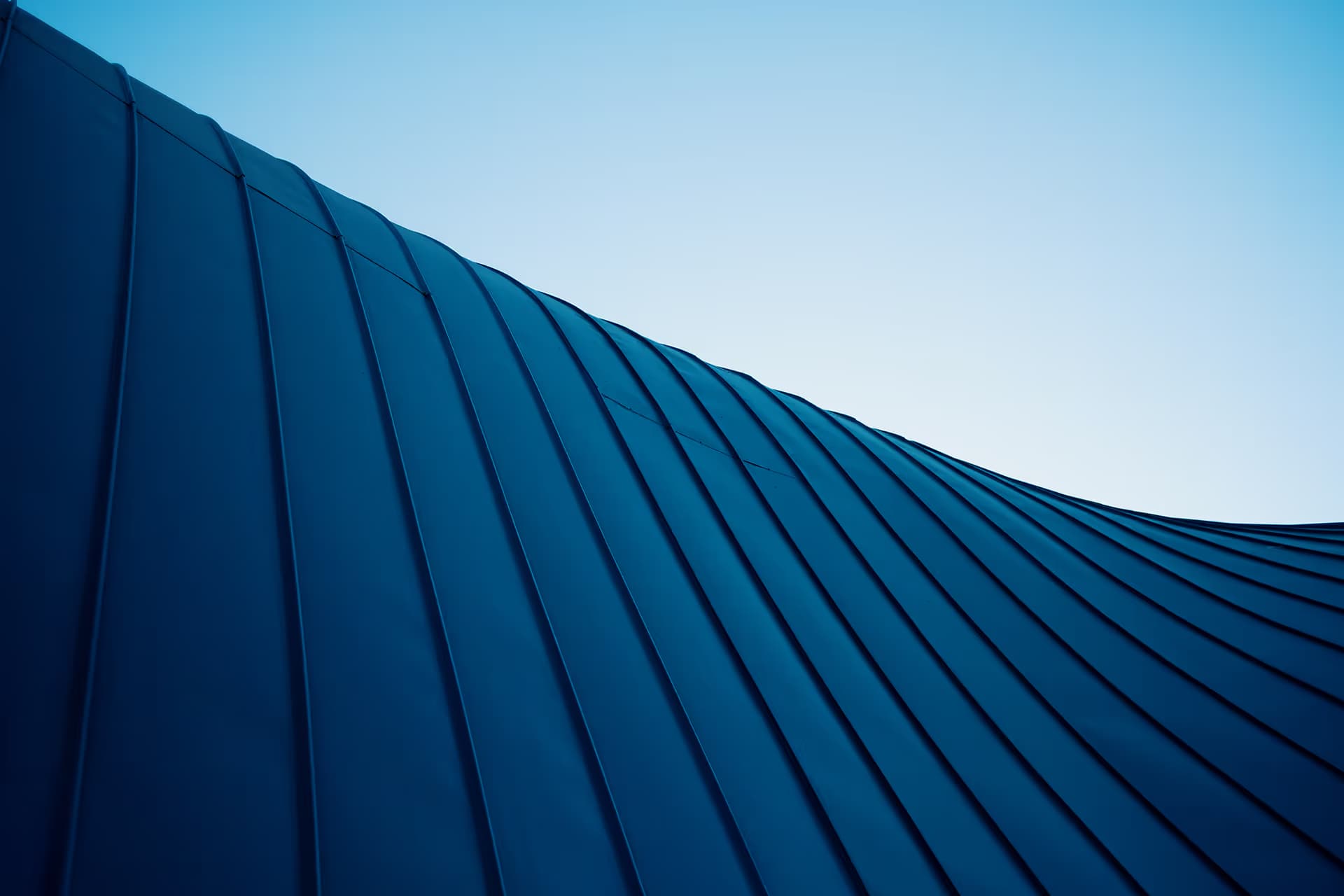
Commercial metal roofing routinely delivers a 40-to-50-year service life, roughly double the typical single-ply membrane. The reason is fundamental: metal doesn't degrade under UV the way a membrane does, it doesn't rely on welded or adhered seams across a vast field, and modern coatings resist corrosion and fading for decades. Over a long hold period, the longer life often makes metal the lower lifecycle cost despite the higher first cost.
Metal also brings strong wind resistance, fire performance, and the ability to shed water and snow aggressively across a range of slopes — durability that pays off through decades of weather.
Standing-seam versus exposed-fastener
The two main commercial metal systems differ in how the panels are fastened. Standing-seam systems hide the fasteners under raised, interlocking seams, and many use concealed clips that let the metal expand and contract freely with temperature. That makes standing-seam the premium, longest-lasting, most watertight option — and the right choice for buildings the owner intends to keep.
Exposed-fastener systems screw through the panel face into the structure. They cost less and install faster, which suits agricultural, industrial, and budget-driven buildings, but the exposed fasteners and washers are wear points that need eventual maintenance. Choosing between them is a cost-versus-longevity decision.
Thermal movement and detailing
Metal expands and contracts significantly with temperature, and a system that doesn't accommodate that movement will oil-can, loosen fasteners, or split seams. Standing-seam clips, properly designed expansion details, and correct panel engineering are what let a metal roof move without leaking — which is why metal rewards an experienced installer.
Penetrations, transitions, ridge and eave details, and flashings are where metal roofs leak when they leak. The panel field is robust; the details decide the outcome. King self-performs both roofing and metal framing, so the structure and the roof are engineered and installed together.
Where metal makes sense
Metal is the right answer for sloped buildings the owner will hold long-term, for projects where the architectural look adds value, and for buildings where the lower maintenance burden of metal pays off over decades. It also pairs naturally with reflective coatings for energy performance.
It is a weaker fit for very low-slope or flat roofs, where single-ply membranes drain and seal better, and for short-hold assets where the higher first cost won't be recovered. Honest contractors steer flat roofs and quick flips toward membranes rather than over-selling metal.
Energy and lifecycle considerations
Reflective and cool-roof metal coatings cut cooling load in hot climates like the Southeast, and metal's recyclability and long life give it a strong sustainability story. Over a 40-to-50-year horizon, the combination of low maintenance, energy savings, and longevity often beats the lower-first-cost membrane on total cost of ownership.
The calculus depends on the building and the hold period. For owners planning to keep the asset, metal frequently wins; for short holds, the membrane usually does. Running that comparison honestly is the right way to choose.
Bottom line
Commercial metal roofing earns its higher first cost with a 40-to-50-year life, low maintenance, and strong energy performance on the right buildings — primarily sloped, long-hold assets where standing-seam detailing is done by an experienced installer. King self-performs metal roofing and framing together. Call 706-222-7702 or use the contact form.